China Top PEEK vs Titanium Implants Which Costs Less?

Time:2026-10-11 Author:Sophia
0%

When comparing China’s PEEK and titanium orthopedic implants, price is only the visible part of the decision. The real question is: “What is the difference between PEEK and titanium orthopedic implants in terms of cost?” Buyers must examine material prices, machining, surface treatment, sterilization, packaging, and clinical support.

PEEK often costs more during manufacturing because it requires specialized processing and strict dimensional control. Its radiolucency can reduce imaging interference around the implant. Titanium may offer a lower purchase price, especially for standard screws, plates, and cages. However, complex coatings, porous structures, or custom designs can raise titanium’s final cost significantly.

Dr. Steven M. Kurtz, a recognized PEEK biomaterials researcher, has described PEEK as “a radiolucent material that allows clinicians to assess fusion without metal artifact.” That advantage may influence follow-up imaging and clinical planning, although it does not automatically make PEEK cheaper.

The practical answer is less tidy. A PEEK implant may cost more at checkout, yet its imaging benefits can support clearer postoperative assessment. Titanium remains attractive because suppliers often produce it at scale, with established surgical workflows and broad availability. Regional manufacturing capacity matters greatly in China.

Clinical evidence, not marketing claims, should guide the comparison. Ask for material certificates, mechanical data, sterilization records, and transparent quotations. One overlooked detail can change the total cost. Shipping, revision risk, surgeon preference, and hospital protocols also deserve attention. The cheapest implant is not always the least expensive treatment.
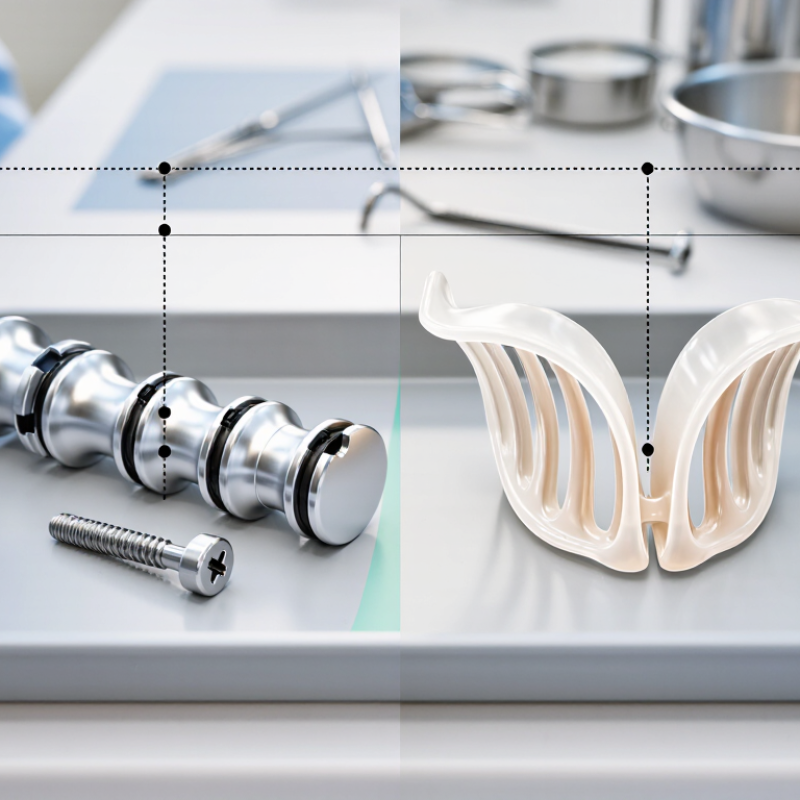
China Top PEEK vs Titanium Implants Which Costs Less?

What Are PEEK and Titanium Implants?

China Top PEEK vs Titanium Implants Which Costs Less?

PEEK and titanium implants are different medical materials with different strengths. PEEK is a lightweight, medical-grade polymer with a bone-like flexibility. Its radiolucent structure can make imaging easier after implantation. However, PEEK may need surface treatment to encourage stronger bone attachment.

Titanium is a strong metal widely used in orthopedic and dental procedures. It has a long clinical history and supports reliable bone integration. Its strength suits areas exposed to repeated mechanical stress. Yet titanium can create imaging artifacts, and its stiffness may not match surrounding bone perfectly. Implant cost depends on design, machining, surface treatment, testing, and clinical support. Therefore, the cheaper material is not always the cheaper treatment. A simple price comparison can miss revision risks, surgical fees, and follow-up imaging. I have found that material discussions become less clear when patients ignore the implant’s purpose.

Tips: Ask for a written quotation that separates implant, surgery, imaging, and follow-up costs. Confirm the material’s medical certification and testing records. Discuss bone quality, body location, expected loading, and imaging needs with a qualified clinician. Cost matters, but choosing only by price can be a costly mistake.

How Are PEEK and Titanium Implants Manufactured in China?

China Top PEEK vs Titanium Implants: Which Costs Less?

PEEK implants typically begin with medical-grade polymer pellets, dried under controlled conditions, then molded or machined into precise shapes. Manufacturers inspect moisture, dimensions, and surface finish before sterilization. Titanium implants usually start with certified alloy bars or powder. CNC machining, additive manufacturing, or forging creates the implant body. Heat treatment can adjust strength and reduce internal stress. It is not a simple comparison.

Grand View Research estimated the global PEEK market at about USD 1.04 billion in 2023, with strong growth expected through 2030. The report links demand to spinal and orthopedic applications. Titanium remains widely used because of its strength, corrosion resistance, and established clinical history. ASTM F2026 covers implantable PEEK, while ASTM F67 addresses unalloyed titanium for surgical implants. These standards influence material testing and production costs in China.

Quality control adds visible and hidden expenses. A Chinese facility may use coordinate-measuring machines, CT inspection, surface roughness testing, and batch traceability records. PEEK can reduce imaging artifacts and machining weight, but specialized processing may raise tooling costs. Titanium often costs more to cut, finish, and polish, especially for complex porous structures. The lower quote is not always the lower clinical cost. A 2024 industry analysis by Fortune Business Insights also identified orthopedic demand as a major driver for both material categories. Supplier qualification, sterilization validation, and regulatory documentation still require careful review. One assumption needs challenging: cheaper manufacturing does not automatically mean comparable performance.

What Factors Determine Their Total Cost?

When comparing PEEK and titanium implants in China, the material price is only one part of the bill. Titanium often has a lower initial cost because its manufacturing process is mature and widely standardized. PEEK can cost more when it requires custom machining, surface treatment, or additional reinforcement. The final quotation should separate implant design, production, sterilization, packaging, and quality testing.

Surgical expenses may change the result. Operating-room time, anesthesia, imaging, hospital charges, and the surgeon’s fee can exceed the implant price. PEEK is radiolucent, which may support clearer follow-up imaging. However, some designs need special fixation methods or coatings. Titanium is strong and familiar, but imaging artifacts may affect postoperative assessment. These clinical differences can influence the total cost over several years.

Logistics also deserve attention. International shipping, insurance, import duties, local registration, and distributor margins may add unexpected charges. Ask whether the quote includes revision support and replacement parts. A low factory price can become expensive after customization and urgent delivery. I have seen purchasing plans underestimate follow-up imaging. That mistake matters. Cost comparisons also need verified material certificates, mechanical data, sterilization records, and traceable production documents. Prices vary by anatomy, order volume, and facility standards. There is no universal winner.

China Top PEEK vs Titanium Implants Which Costs Less? - What Factors Determine Their Total Cost?

Cost Dimension PEEK Implants Titanium Implants Typical Cost Impact What Determines the Final Price?
Implant Material Usually higher than standard titanium for medical-grade, implantable PEEK. Often lower because titanium has a mature supply chain and broad clinical use. Titanium is commonly less expensive at the basic material level. Material grade, purity, certification, supplier volume, and whether the implant is solid, porous, reinforced, or patient-specific.
Typical Implant-Only Price Approximately US$800–US$3,000 for many custom or complex implant applications. Approximately US$500–US$2,500 for many standard or custom implant applications. Ranges overlap substantially; neither material is always cheaper. Application, implant size, design complexity, manufacturing method, regulatory status, and purchasing volume.
Manufacturing Method Machining, compression molding, and additive manufacturing may be used; complex designs can increase processing costs. CNC machining, forging, casting, and metal additive manufacturing are widely established. Standard titanium designs often have a cost advantage, while simple PEEK designs may be competitive. Production quantity, tolerances, post-processing, surface treatment, sterilization, and inspection requirements.
Custom or Patient-Specific Design Often US$1,500–US$5,000 or more when based on patient imaging and customized geometry. Often US$1,500–US$5,000 or more for comparable patient-specific designs. Design customization can affect total cost more than the choice of material. CT data processing, 3D modeling, engineering review, design revisions, validation, and low-volume production.
Surface Treatment May require coating or surface modification to improve bone integration, adding a separate cost. May use roughening, porous structures, blasting, anodizing, or other surface treatments. A treated PEEK implant can cost more than an untreated titanium implant. Coating type, porous architecture, treatment area, process validation, and testing requirements.
Imaging and Surgical Planning Radiolucency can support visualization of bone and soft tissue, but advanced planning may still be needed. Metal can create imaging artifacts in some modalities, potentially requiring additional planning or imaging. The difference is case-specific and usually smaller than the surgical cost. CT or MRI requirements, image quality, software planning, surgeon preference, and hospital protocols.
Operating Room and Surgical Costs Generally comparable to titanium when the surgical technique and procedure are similar. Generally comparable to PEEK for the same procedure and complexity. Surgery, anesthesia, hospital, and professional fees usually dominate total treatment cost. Procedure type, operating time, facility, geographic region, anesthesia, inpatient stay, and insurance coverage.
Fixation Hardware May require additional screws, plates, or fixation systems, especially in load-bearing applications. May also require fixation hardware; compatibility depends on the implant design. Additional hardware can add hundreds to several thousand US dollars. Number and type of screws, plates, locking mechanisms, imaging requirements, and surgical approach.
Sterilization and Packaging Packaging and sterilization requirements depend on the polymer, design, and validated process. Commonly supported by established sterilization and packaging workflows. Titanium may have lower routine processing costs, but the difference varies by manufacturer and product. Single-use packaging, sterilization method, shelf-life testing, cleanroom controls, and batch size.
Regulatory and Quality Costs Testing may include biocompatibility, mechanical performance, chemical characterization, and aging studies. Requires comparable device-quality documentation and applicable biological and mechanical testing. New or customized designs can carry higher compliance costs regardless of material. Market jurisdiction, device classification, clinical evidence, testing scope, traceability, and quality-system requirements.
Revision or Complication Risk Potential savings from radiolucency may be offset if additional fixation or revision procedures are needed. Long clinical use provides extensive experience, but complications and revisions remain possible. A lower purchase price does not necessarily mean a lower lifetime treatment cost. Patient health, anatomy, implant fit, surgical technique, infection risk, healing, load conditions, and follow-up care.
Estimated Total Treatment Cost Often approximately US$8,000–US$40,000 or more, including surgery and hospital-related charges. Often approximately US$7,500–US$40,000 or more for a comparable procedure. Titanium is frequently cheaper initially, but the total cost may be similar when all services are included. Country, hospital, procedure complexity, implant customization, insurance reimbursement, length of stay, and follow-up.
Best Cost-Value Scenario May offer value when radiolucency, lightweight construction, anatomical customization, or imaging visibility is clinically important. Often offers value for standardized, load-bearing, and widely supported procedures. The clinically appropriate material is usually more important than the lowest unit price. Clinical objective, surgeon experience, patient anatomy, expected service life, available suppliers, and total care pathway.
Overall Cost Conclusion Can be more expensive as an implant, particularly when custom manufacturing or surface treatment is required. Often costs less initially for standard designs and high-volume procedures. Titanium commonly costs less upfront, while PEEK may be cost-effective in selected clinical applications. Compare the complete treatment episode—not only the implant quotation—including planning, surgery, hospitalization, rehabilitation, and potential revision.
Cost ranges are broad, non-brand estimates for comparison purposes and may vary considerably by country, medical indication, hospital, implant design, insurance policy, and regulatory requirements. A qualified medical team should determine clinical suitability and obtain a current quotation.
All amounts are stated in approximate US dollars. Implant-only prices and total treatment costs are separate estimates and should not be added together.

PEEK vs Titanium: Which Implant Costs Less?

PEEK versus titanium implant costs depend on more than the material price. Titanium often costs less to manufacture because its supply chain is mature. PEEK may require specialized molding, machining, and surface treatment. Those steps can raise the initial quotation. In China, local production may reduce shipping and import expenses, but quality controls still affect the final price.

The cheaper implant is not always cheaper overall. Titanium offers strong mechanical performance and a long record of clinical use. PEEK is lightweight and can reduce imaging artifacts during follow-up scans. However, some PEEK implants need added surface treatment or reinforcement. That can increase both manufacturing and inspection costs. Surgical technique also matters. A familiar design may shorten operating time, while a lower-priced design may require more preparation.

Ask for an itemized quotation. It should separate the implant, sterilization, surgical instruments, imaging, and follow-up care. Do not compare two prices without checking their specifications. A basic titanium implant may appear cheaper than a highly customized PEEK implant. That comparison is imperfect. I have seen buyers focus on unit price and overlook revision planning, inventory, and compatibility with existing instruments. Material choice should be reviewed by a qualified surgeon and procurement team. Costs can change with anatomy, hospital fees, certification requirements, and production volume. Thin savings today may create unclear expenses later.

How Should Buyers Compare Quality, Safety, and Long-Term Value?

China Top PEEK vs Titanium Implants Which Costs Less?

Buyers should compare total value, not only the purchase quote. Titanium usually has a longer clinical record and strong osseointegration evidence. Its elastic modulus is about 105–120 GPa. PEEK is closer to cortical bone, at roughly 3–4 GPa, according to biomaterials reviews published in Materials and Biomaterials. This difference may reduce stress shielding, but outcomes depend on surface treatment, implant design, and surgical technique. PEEK is not automatically safer.

Material price can mislead. PEEK may cost more when it needs carbon reinforcement, porous coating, or custom machining. Titanium may increase imaging artifacts, while radiolucent PEEK can support clearer follow-up images. However, revision rates, sterilization, instrumentation, surgeon experience, and local regulatory documentation can change the real cost. ISO 10993 biological evaluation and ASTM F2026 for implantable PEEK provide useful quality checkpoints. Neither standard proves long-term clinical success.

Tips: Ask for five-year clinical data, not only laboratory strength. Request batch traceability, fatigue testing, sterilization validation, and post-market surveillance records. Compare the full treatment pathway in the target hospital. A cheaper implant may become expensive after one revision. I would also question polished sales claims. Published evidence remains uneven, and some studies use small patient groups.

China Top PEEK vs Titanium Implants: Which Costs Less?

Titanium generally offers a lower and more predictable material cost, while PEEK can carry a higher raw-material price but is much lighter, radiolucent, and closer to cortical bone in elastic modulus. The chart uses a relative index with titanium set at 100; actual implant prices depend on geometry, processing, sterilization, regulatory requirements, surgical design, and supplier qualification.

Engineering reference values: titanium density approximately 4.5 g/cm³ and elastic modulus approximately 110 GPa; PEEK density approximately 1.32 g/cm³ and elastic modulus approximately 3.6 GPa. PEEK’s radiolucency is represented as 100 and titanium’s as 0 for comparative visualization.

FAQS

What are the main differences between PEEK and titanium implants?

PEEK is a lightweight medical polymer with bone-like flexibility. Titanium is a strong metal with extensive clinical use. Their performance depends on the implant’s location and purpose.

Which implant material usually costs less?

Titanium often has a lower manufacturing cost. Its supply chain is mature. However, specialized PEEK machining and surface treatment can raise the final quotation.

Is the cheaper implant always cheaper overall?

Not always. Surgical time, imaging, instruments, follow-up, and revision planning also affect total cost. A low unit price can hide later expenses.

Why might a PEEK implant cost more?

Some PEEK implants need surface treatment or reinforcement. These steps may increase machining, testing, inspection, and certification costs. Custom designs can cost more too.

What imaging benefits can PEEK provide?

PEEK is radiolucent, so it may create fewer imaging artifacts. Follow-up scans can show nearby tissues more clearly. The result still depends on the imaging method.

What advantages does titanium offer?

Titanium provides high strength for areas facing repeated mechanical stress. It also supports reliable bone integration. Its long clinical history may simplify selection.

What limitations should patients consider?

Titanium may create imaging artifacts and feel stiffer than surrounding bone. PEEK may need added treatment for stronger bone attachment. Neither material suits every case.

What should an itemized quotation include?

It should separate the implant, sterilization, surgical instruments, imaging, surgery, and follow-up care. Check whether testing and certification costs are included.

What questions should someone ask before choosing an implant?

Ask about bone quality, body location, expected loading, imaging needs, and compatibility with existing instruments. Confirm medical certification and testing records. Price alone is a weak guide.

Can local production reduce implant costs?

Local production may reduce shipping and import expenses. Quality controls still affect the final price. I might compare two prices too quickly, and that can mislead.

Conclusion

PEEK and titanium implants are both advanced orthopedic solutions, but they differ in material properties, manufacturing methods, and total cost. PEEK is a lightweight, radiolucent polymer with an elastic modulus closer to bone, while titanium offers high strength, excellent durability, and well-established biocompatibility. In China, PEEK implants may require specialized molding, machining, or additive manufacturing, whereas titanium implants are commonly produced through precision machining, forging, or metal 3D printing. The final price depends on raw materials, design complexity, customization, surface treatment, testing, sterilization, packaging, and order volume.

What is the difference between PEEK and titanium orthopedic implants in terms of cost? In many cases, standard titanium implants may have a lower initial purchase price because of mature production systems and broad supplier availability. However, PEEK can offer value when its imaging advantages, lighter weight, or bone-like flexibility reduce clinical and follow-up challenges. Buyers should compare verified quality systems, material traceability, mechanical performance, regulatory documentation, consistency, service, and expected service life rather than choosing solely by unit price.

Sophia

Sophia

Sophia is a dedicated marketing professional with an exceptional depth of knowledge about her company's products and services. With a keen understanding of market trends and customer needs, she crafts insightful blog posts that not only inform but also engage readers, enriching the company’s online......